

Introduction
You’ve probably heard that blockchain is secure, transparent, and decentralized. But the real question is: how does blockchain actually work behind the scenes?
For many beginners, this is where things get confusing. Terms like nodes, blocks, and consensus can feel technical. But once you break it down step by step, it becomes very easy to understand.
In this guide, we’ll explain how blockchain works in a simple and human-friendly way so you can clearly understand the process.
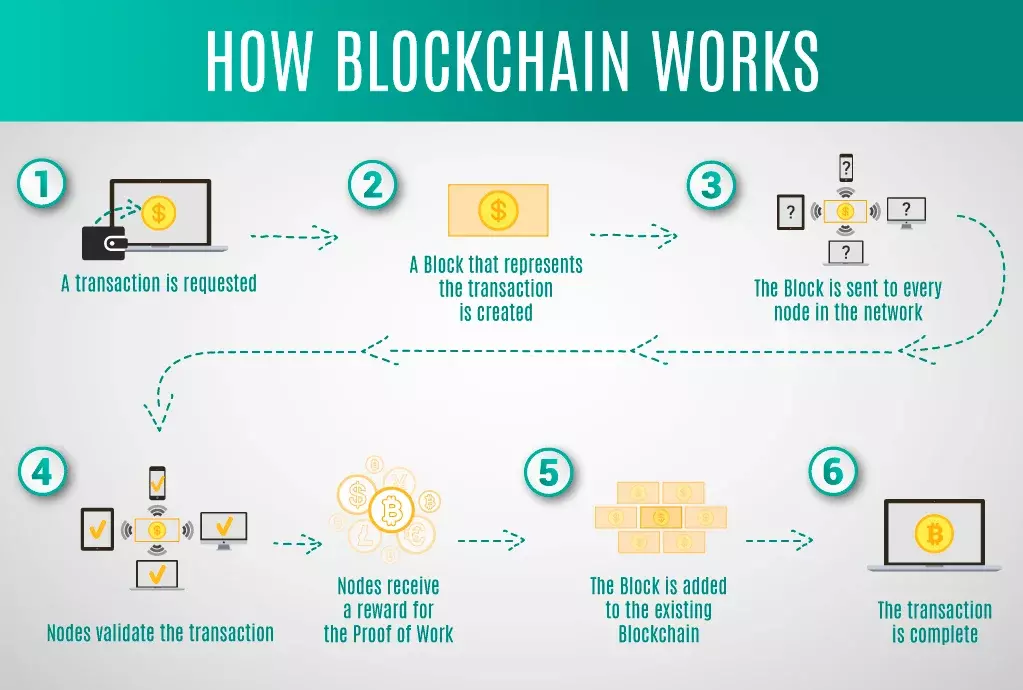
Step 1: A Transaction is Created
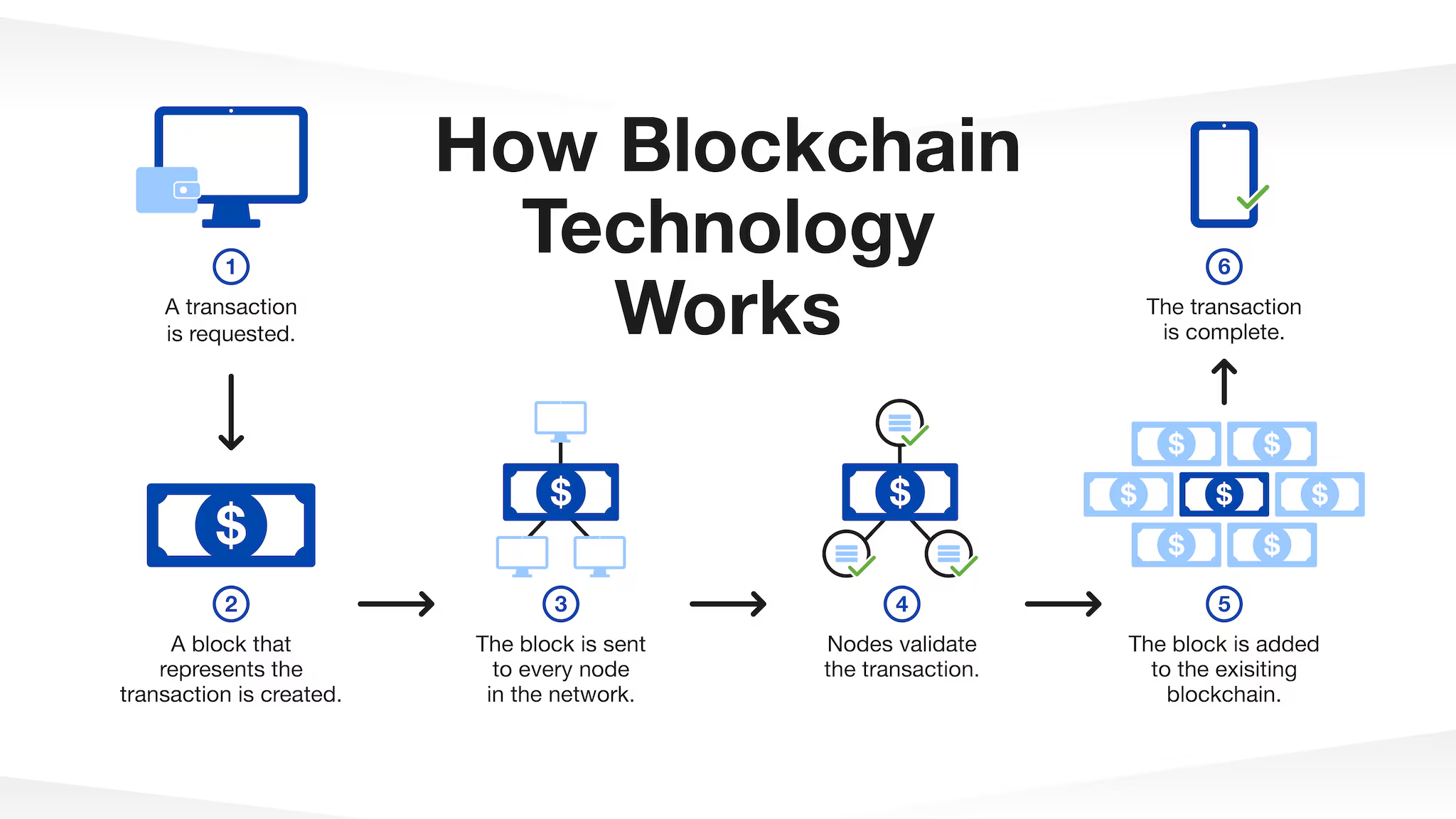
Everything on a blockchain starts with a transaction.
A transaction could be sending cryptocurrency, storing data, or interacting with a smart contract.
For example, if you send Bitcoin to someone, that action becomes a transaction request.
This transaction includes important details like sender address, receiver address, and amount.
Step 2: Transaction is Broadcast to the Network
Once the transaction is created, it is sent to a network of computers called nodes.
Nodes are independent systems that maintain a copy of the blockchain and help verify transactions.
Instead of relying on one central server, blockchain uses multiple nodes, which makes the system decentralized.
Step 3: Transaction Verification
After the transaction reaches the network, nodes begin verifying it.
They check whether:
- The sender has enough balance
- The transaction follows network rules
- The digital signature is valid
This verification process ensures that no fake or invalid transactions are added to the blockchain.
You can explore real transaction verification processes on platforms like Blockchain.com.
Step 4: Transactions are Grouped into a Block
Once transactions are verified, they are grouped together into a block.
A block contains:
- A list of transactions
- A timestamp
- A unique identifier called a hash
This block is like a page in a digital ledger.
Step 5: Block is Linked to the Previous Block
Now comes the most important part.
Each new block is connected to the previous block using its hash.
This creates a chain of blocks, which is why it’s called blockchain.
If someone tries to change data in one block, it would change its hash, breaking the entire chain.
This makes blockchain highly secure and tamper-resistant.
Step 6: Consensus Mechanism
Before adding the block to the chain, the network must agree that it is valid. This process is called consensus.
Different blockchains use different methods for this.
Some use Proof of Work, where miners solve complex problems.
Others use Proof of Stake, where validators are chosen based on their holdings.
You can learn more about consensus mechanisms on Investopedia.
Consensus ensures that all nodes agree on the same version of the blockchain.
Step 7: Block is Added to the Blockchain
Once the block is verified and approved, it is added to the blockchain.
The transaction is now complete and becomes a permanent record.
This record cannot be easily changed or deleted.
Anyone can view this transaction on public blockchains, which ensures transparency.
Step 8: Transaction is Confirmed
After the block is added, the transaction receives confirmations.
Each new block added after it increases its security and reliability.
In most cases, multiple confirmations are required before considering a transaction fully complete.
This process ensures accuracy and prevents fraud.
Why This Process is Secure
Blockchain’s security comes from its structure and process.
Because data is stored across multiple nodes, there is no single point of failure.
Because blocks are linked together, changing one block would require changing the entire chain.
Because of consensus mechanisms, no single user can control the system.
These factors make blockchain one of the most secure systems for storing data.
Real-Life Example
Imagine you are sending money to a friend using blockchain.
Instead of a bank processing the transaction, a network of computers verifies it.
The transaction is recorded in a block, added to a chain, and confirmed by the network.
No middleman is involved, and the record is permanent.
This is how blockchain replaces traditional systems.
Common Misunderstandings
Many beginners think blockchain transactions are instant, but in reality, they take time for verification and confirmation.
Some also believe blockchain is completely anonymous, but most networks are actually transparent.
Understanding these details helps you use blockchain more effectively.
Conclusion
Blockchain may seem complex, but when broken down step by step, it becomes easy to understand.
From creating a transaction to verifying it, adding it to a block, and confirming it, every step is designed to ensure security and transparency.
By learning how blockchain works, you build a strong foundation for understanding cryptocurrency and other blockchain applications.
In simple terms, blockchain works like a secure digital system where every transaction is verified, recorded, and protected—and that’s what makes it so powerful.
blog 2 de
Types of Blockchain: Public vs Private vs Consortium Explained (Beginner Guide 2026)
Introduction
Not all blockchains are the same.
When people hear the word blockchain, they usually think about Bitcoin or public networks. But in reality, there are different types of blockchain systems, each designed for specific use cases.
Understanding these types is important because it helps you see how blockchain is used not just in crypto, but also in businesses, governments, and organizations.
In this guide, we’ll break down the three main types of blockchain in a simple and human-friendly way.
What are Blockchain Types?
Blockchain types refer to how a blockchain network is structured, who can access it, and who controls it.
The three main types are:
- Public Blockchain
- Private Blockchain
- Consortium Blockchain
Each type has its own advantages, limitations, and real-world applications.
If you want a technical overview, you can explore blockchain classifications on Investopedia.
Public Blockchain
A public blockchain is an open network that anyone can join.
There are no restrictions. Anyone can read, write, and participate in the network.
Popular examples include Bitcoin and Ethereum.
In a public blockchain, transactions are verified by a decentralized network of nodes, and data is fully transparent.
Key Characteristics of Public Blockchain
- Open to everyone
- Fully decentralized
- High transparency
- Strong security
Advantages
Public blockchains are highly secure because they are distributed across many nodes.
They promote transparency since anyone can view transactions.
They do not rely on a central authority, which increases trust.
Disadvantages
They can be slower due to large network size.
Transaction fees can be high during congestion.
Scalability can sometimes be an issue.
You can explore live public blockchain data using Blockchain.com.
Private Blockchain
A private blockchain is controlled by a single organization.
Access is restricted, and only authorized users can participate.
This type is commonly used by companies for internal operations.
Key Characteristics of Private Blockchain
- Permission-based access
- Centralized control
- Limited transparency
- Faster performance
Advantages
Private blockchains are faster because fewer nodes are involved.
They offer better privacy and control.
They are more efficient for internal business processes.
Disadvantages
They are less decentralized.
Trust depends on the controlling organization.
They are not as transparent as public blockchains.
Consortium Blockchain
A consortium blockchain is a hybrid model.
It is controlled by a group of organizations instead of a single entity.
This type is often used in industries where multiple parties need to collaborate.
Key Characteristics of Consortium Blockchain
- Controlled by multiple organizations
- Semi-decentralized
- Permission-based
- Balanced transparency
Advantages
It combines decentralization with efficiency.
It is more secure than private blockchains.
It allows collaboration between organizations.
Disadvantages
Setup can be complex.
Decision-making can be slower due to multiple stakeholders.
It is not fully open like public blockchains.
Comparison Between the Three Types
Public blockchain is best for transparency and decentralization.
Private blockchain is ideal for businesses that need control and speed.
Consortium blockchain works well when multiple organizations need shared control.
Each type solves different problems depending on the use case.
Real-World Use Cases
Public blockchains are mainly used for cryptocurrencies, NFTs, and decentralized apps.
Private blockchains are used by companies for data management, supply chains, and internal systems.
Consortium blockchains are used in banking, healthcare, and logistics where multiple parties need access.
These use cases show how flexible blockchain technology can be.
Which One Should You Choose?
The choice depends on your needs.
If you want openness and transparency, public blockchain is the best option.
If you need privacy and control, private blockchain is more suitable.
If you are working with multiple organizations, consortium blockchain is the right choice.
There is no one-size-fits-all solution.
Conclusion
Blockchain technology is not limited to one structure.
Public, private, and consortium blockchains each offer unique benefits and serve different purposes.
By understanding these types, you can better understand how blockchain is applied in real-world scenarios.
In simple terms, blockchain is flexible and its different types make it suitable for everything from cryptocurrencies to enterprise solutions.
Also Check How Blockchain Technology Works – Powerful Guide – 2026





Leave a Reply